One of the most iconic models in automotive history, the Volkswagen Beetle is not just a car, it is a symbol of an era, a cultural icon, and an emotional journey for millions. Known as the “Kaplumbağa” (Turtle) in Turkish or “Käfer” (Beetle) in its original German, this vehicle became one of the most recognizable automobiles of the 20th century.
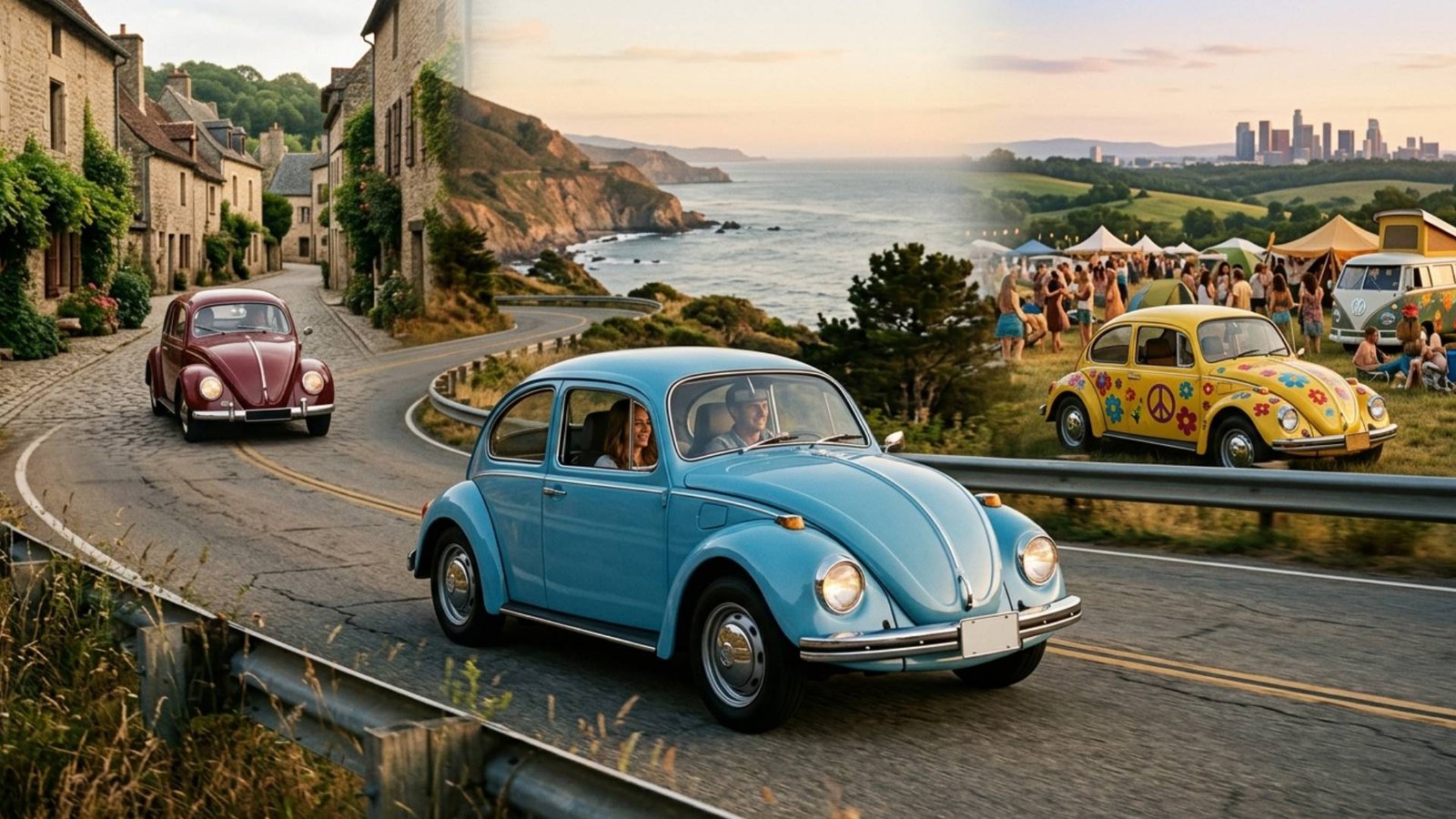
Below is a detailed look at the Beetle’s story, from its birth to its modern evolution, cultural impact, and production history.
The Birth: A People’s Car
The story of the Volkswagen Beetle begins in 1930s Germany. The political and economic conditions of the era restricted broad access to affordable, durable, and family-friendly automobiles. In 1934, Ferdinand Porsche was commissioned to design a “people’s car.” This vehicle was named Volkswagen (literally meaning “people’s car” in German).
The prototype engineered by Porsche stood out with its aerodynamic shape, air-cooled rear engine, and rear-wheel-drive structure. However, with the outbreak of World War II, mass production plans were put on hold. After the war, production was restarted under the direction of British occupation forces.
Mass Production and Global Expansion
In the post-war era, British Army officer Ivan Hirst was instrumental in reopening the factory in Wolfsburg. In 1945, the first civilian production models rolled off the assembly line. The Beetle entered the American market in 1949 and gained massive popularity, particularly during the 1960s.
Throughout the 1960s and 1970s, the Beetle reached millions around the globe due to its simple structure, low fuel consumption, ease of repair, and remarkable reliability. In 1972, with over 15 million units produced, it broke the long-standing record held by the Ford Model T to become the most produced automobile model in history.
Design and Technical Specifications
The Beetle’s distinctive design easily set it apart from all other vehicles on the road. Its rounded contours, forward-slanted headlights, and arched roof earned it affectionate nicknames across different languages and cultures.
Key Technical Specifications (Classic Beetle):
Engine: 4-cylinder air-cooled boxer engine
Engine Position & Drive: Rear engine, rear-wheel drive (RWD)
Power Output: 25 to 60 horsepower (varying by model year)
Transmission: Manual transmission
Body Type: Monocoque (unibody) chassis
Thanks to this robust mechanical layout, the Beetle demonstrated strong performance even in harsh weather conditions and on rough terrain.
Cultural Impact and Popularity
During the 1960s and 1970s, the Beetle became an enduring emblem of youth movements, freedom, and alternative lifestyles. In the United States, it achieved iconic status as the “hippie car.” Its compact size, economical operation, and friendly look appealed to people across all social classes.
The global popularity of the Herbie movie series, launched in the late 1960s, pushed the Beetle into legendary status. Featuring a lovable white Beetle numbered “53” with a mind of its own, Herbie raced, helped people, and captivated audiences worldwide.
End of Production and Modern Transformation
By the 1980s, the rise of Japanese automobiles and newer design trends caused Beetle sales to decline in Western markets. While European and American assembly lines gradually closed, strong demand persisted in Latin America. In 2003, the final classic Beetle rolled off the assembly line in Puebla, Mexico, bringing the original production run to a close.
However, Volkswagen did not let the legacy disappear. In 1998, the company introduced the New Beetle, featuring a front-engine, front-wheel-drive layout with a retro design aimed at nostalgic drivers. The model received a sportier update in 2011, but as consumer preferences shifted toward SUVs and electric vehicles, Volkswagen officially ended Beetle production in 2019.
Why Was It Loved So Much?
Timeless Design: A unique, endearing silhouette that never went out of style.
Reliability: Built with a simple, solid mechanical structure that ensured longevity.
Affordability: Low fuel consumption combined with low maintenance costs.
Cultural Symbol: Represented freedom, simplicity, and individuality.
Collectibility and Classic Car Value
Today, classic Volkswagen Beetles are prized antiques among collectors and automotive enthusiasts. Well-preserved models from the 1950s and 1960s with original parts command high market values, and restoration projects remain extremely popular across the globe.
Finally
The Volkswagen Beetle stands as one of the most remarkable success stories in automotive history. Having touched millions of lives, appeared in films, and served families across generations, it remains far more than just a car; it is a four-wheeled legend carrying memories of the past into the future.